
Best 5 AV Solutions for Modern Meeting Rooms: The Ultimate Guide to Smarter Collaboration
December 24, 2025
Smart Classroom vs Hybrid Classroom: Which one is Better for Modern Education?
January 28, 2026
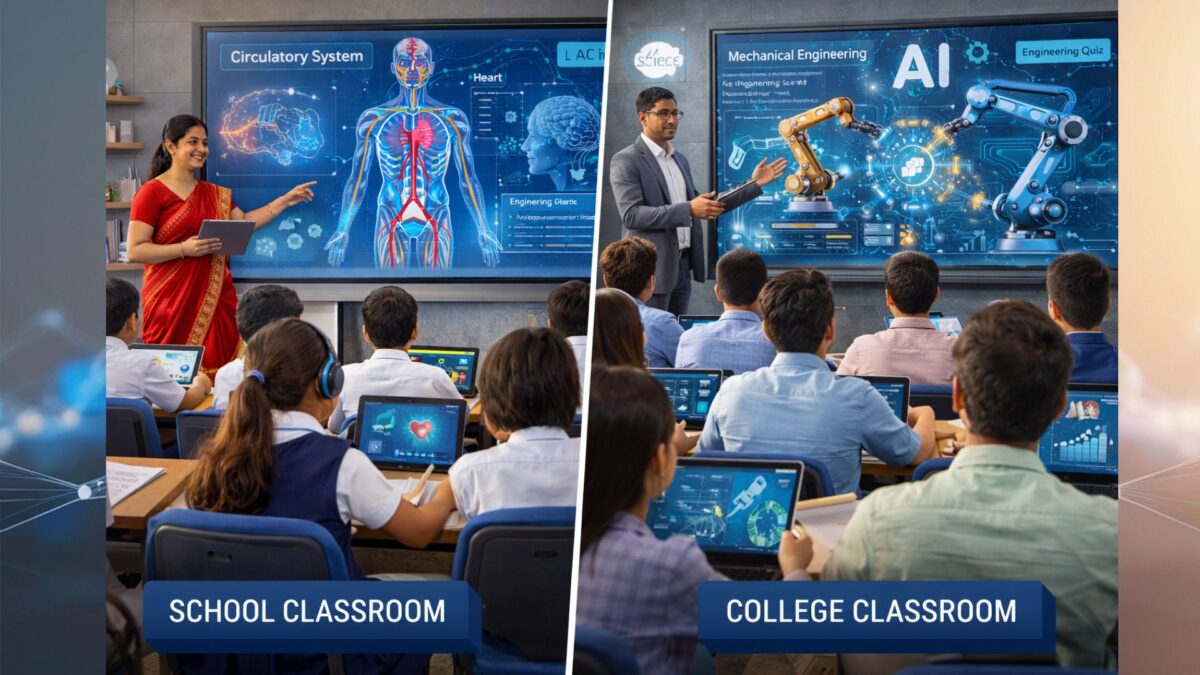
Imagine stepping into a classroom where learning feels alive—where lessons adapt to every student, curiosity is encouraged, and technology works seamlessly with teaching. This is no longer a vision of the future. With modern education technology, classrooms today are transforming into smart, interactive learning environments. Modern education technology enables teachers to personalize lessons, improve engagement, and prepare students for future-ready skills.
Traditional teaching methods are evolving. Textbooks and lectures are now supported by AI-powered learning tools, smart classrooms, immersive VR experiences, and cloud-based collaboration platforms. Together, these innovations are reshaping how students learn and how teachers teach.
In this blog, we explore how modern education technology is revolutionizing classrooms, the key technologies driving this change, and practical ways educators can begin upgrading their classrooms today.
The role of modern education technology is critical in reshaping traditional classrooms into intelligent, data-driven learning spaces.
Limitations of Traditional Classroom Teaching
For decades, education followed a standardized approach—one curriculum, one pace, and one teaching style for all students. While effective for some learners, this model often fails to support students with different learning speeds, abilities, or learning styles.
Teachers also face heavy administrative workloads, leaving less time for mentoring, creativity, and personalized instruction.
How Modern Education Technologies Are Changing Education
Modern education technology replaces the “one-size-fits-all” approach with personalized, data-driven, and engaging learning experiences.
Personalized Learning for Every Student
AI-driven education platforms analyze student performance in real time, identifying learning gaps, strengths, and behavioral patterns.
-
Struggling students receive targeted support and extra practice
-
Advanced learners are challenged with enriched content
-
Teachers gain actionable insights into student progress
This personalized learning approach ensures that every student gets the right support at the right time.
Increased Engagement Through Immersive Learning
Today’s students are digital natives. Traditional teaching methods alone often struggle to maintain engagement. Immersive learning technologies like Virtual Reality (VR) and Augmented Reality (AR) bring lessons to life.
-
Students explore historical events through VR simulations
-
Complex scientific concepts are visualized using 3D models
-
Abstract topics become tangible and memorable
This interactive approach improves comprehension, retention, and curiosity.
Collaboration Beyond Classroom Walls
Cloud-based learning platforms enable seamless collaboration beyond physical classrooms.
Students can:
-
Work on shared assignments in real time
-
Access learning materials anytime, anywhere
-
Communicate with teachers and peers remotely
This flexibility promotes inclusive, continuous, and collaborative learning, preparing students for modern digital workplaces.
Improving Teaching Efficiency with Education Technologies
Modern education technology also supports teachers by automating routine tasks.
-
Automated grading and attendance tracking
-
Performance analytics and progress reports
-
Reduced administrative workload
This allows educators to focus on instruction, mentoring, and student engagement, enhancing overall teaching effectiveness.
Key Technologies Shaping the Future of Education
At the core of today’s smart classrooms is modern education technology, which integrates AI, cloud computing, immersive learning tools, and smart classroom infrastructure to enhance both teaching and learning outcomes.
Artificial Intelligence (AI): Personalized Learning with AI-Powered Tools
AI is at the heart of personalized learning. AI-powered tools:
-
Adapt learning paths for individual students
-
Provide instant feedback
-
Predict learning outcomes and challenges
For educators, AI delivers deeper insights and saves valuable time.
Cloud Computing: Cloud-Based Collaboration for Students and Teachers
Platforms like Google Classroom and Microsoft Teams ensure secure and flexible access to learning resources.
Benefits include:
-
Real-time collaboration
-
Easy assignment management
-
Anytime, anywhere learning access
Cloud computing makes education more accessible and scalable.
Virtual Reality (VR) & Augmented Reality (AR): Learning by Experience
VR creates fully immersive environments, while AR enhances real-world learning with digital overlays.
These technologies:
-
Increase student engagement
-
Improve understanding of complex topics
-
Encourage experiential learning
They redefine how students interact with content.
Internet of Things (IoT): Smart Classrooms with Interactive Smartboards
IoT connects devices such as:
-
Interactive smartboards
-
Smart displays
-
Classroom sensors
Smart classroom technology enables responsive learning spaces that adapt in real time, improving interaction and lesson delivery.
These tools collectively represent the evolution of modern education technology in schools and higher education institutions.
How to Integrate Technology into Your Classroom: Practical Steps for Teachers
Start Small
Starting with modern education technology solutions like interactive smart boards or cloud-based platforms allows educators to upgrade classrooms with minimal disruption.
Collaborate with Fellow Educators
Sharing experiences and best practices accelerates adoption and builds confidence in using education technology.
Focus on Learning Outcomes
Technology should enhance—not distract from—learning. Choose tools that improve engagement, understanding, and retention.
Invest in Continuous Professional Development
Online training, webinars, and workshops help educators stay confident and updated as technology evolves.
Address Common Challenges
-
Limited devices: Use mobile-friendly or low-resource tools
-
Lack of training: Leverage free tutorials and peer support
-
Resistance to change: Share success stories and measurable results
-
Balance: Combine technology with proven teaching methods
Build a Positive Digital Culture
Teach students about digital citizenship, ethical usage, and online responsibility to ensure technology empowers learning.
The Broader Impact: Preparing Students for the Future
Future-Ready Skills
Technology develops problem-solving, creativity, adaptability, and collaboration skills essential for tomorrow’s careers.
Digital Literacy
Students learn to evaluate information critically, understand cybersecurity basics, and use technology responsibly.
Global Collaboration
Digital platforms allow students to collaborate across cultures and geographies, fostering global perspectives.
Lifelong Learning
Technology encourages continuous learning, helping students adapt to evolving industries and career paths.
Ethical Awareness
Educators play a vital role in guiding students on data privacy, digital ethics, and responsible technology use.
Conclusion: Empowering the Classrooms of Tomorrow
The classroom of tomorrow is already here, powered by modern education technology that makes learning more engaging, personalized, and collaborative. By adopting modern education technology, schools can build future-ready classrooms that empower both students and educators.
While the journey toward a tech-enabled classroom may feel challenging, educators don’t have to take it alone.
Pentagon is committed to empowering schools and institutions with innovative, seamless, and future-ready education technology solutions. From smart classrooms to advanced interactive displays, Pentagon helps transform teaching environments and prepare students for a digital future.
👉 Now is the time to upgrade your classroom. Connect with Pentagon and turn your vision of modern education into reality.
- Digital Kiosk8 products
- Indoor LED Video Walls2 products
- Outdoor LED Video Walls1 product
- Digital Non-Touch Kiosk2 products
- Interactive Display4 products
- OPS1 product
- LED Video Walls1 product
- Podium2 products
- Audio Podium1 product
- Digital Podium1 product
- Video Conferencing Cameras13 products
- PenVC Cameras7 products
- PTGN Cameras6 products