

How to Upgrade Your Classroom with Modern Education Technology
January 8, 2026
How AI Smart Classrooms Improve Learning Outcomes in Schools and Colleges
February 14, 2026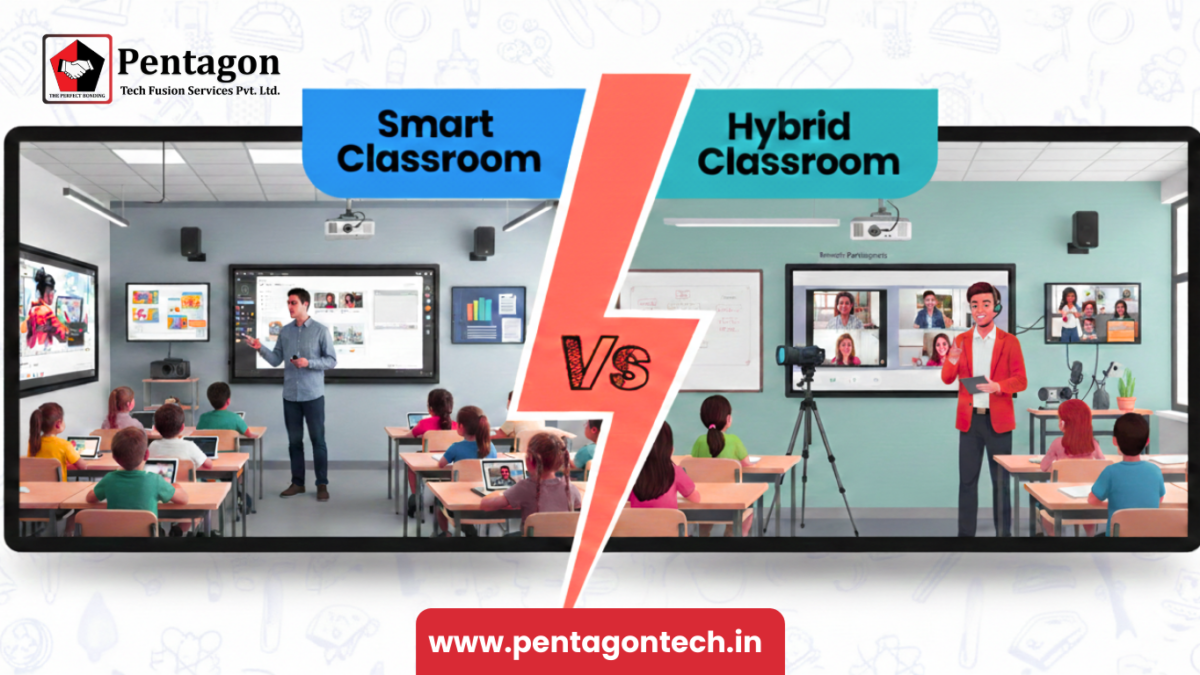
The debate around Smart Classroom vs Hybrid Classroom has become increasingly important as educational institutions adopt technology-driven teaching methods. Schools, colleges, and universities are looking for classroom models that improve learning outcomes, enhance teacher effectiveness, and prepare students for the future. While both smart classrooms and hybrid classrooms rely on advanced classroom technology, their approach, structure, and impact on students and teachers differ significantly.
This blog offers a detailed Smart Classroom vs Hybrid Classroom comparison, focusing on benefits for students and teachers, helping institutions decide which model best suits their academic goals.
This Smart Classroom vs Hybrid Classroom comparison helps educators clearly understand which classroom model delivers better outcomes for students and teachers.
Understanding the Basics
What Is a Smart Classroom?
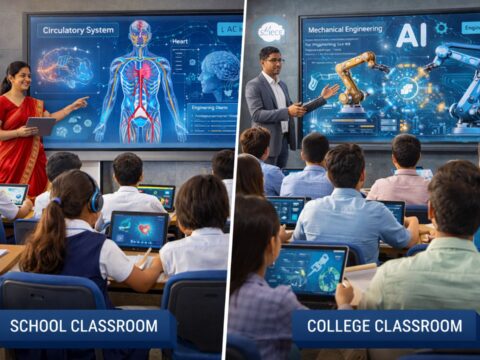
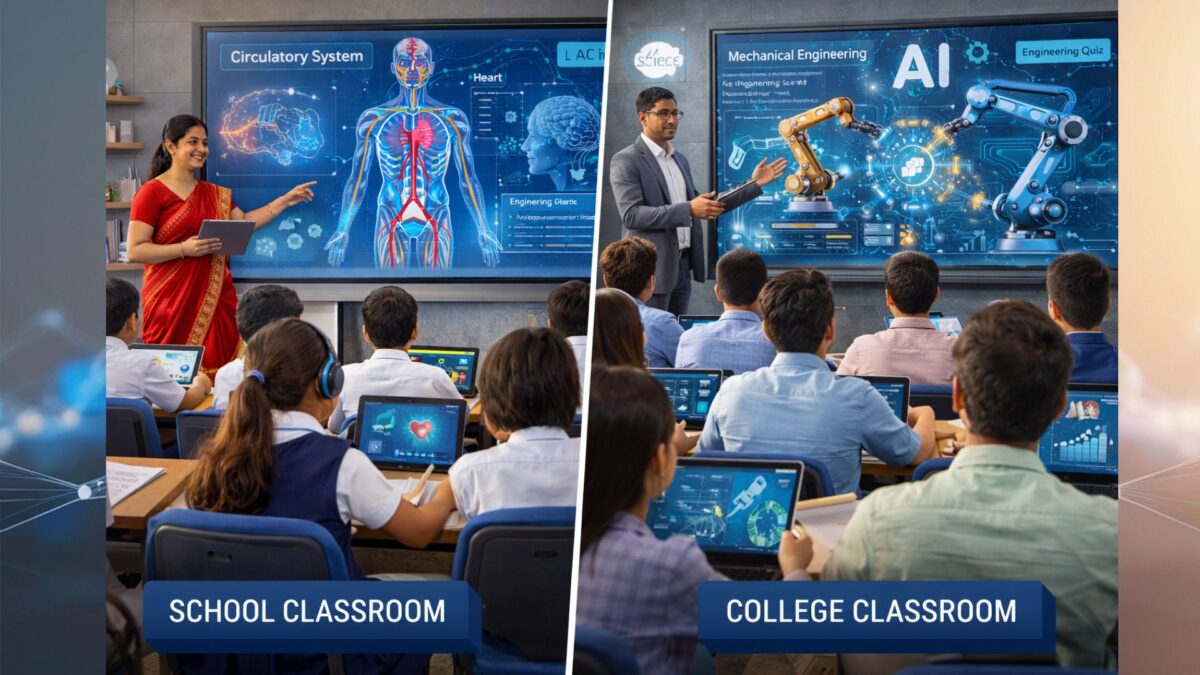
A Smart Classroom is a technology-enabled physical classroom designed to enhance face-to-face teaching using digital tools. It typically includes interactive flat panels or smartboards, digital content, audio-visual systems, learning management software and real-time assessment tools.
The core objective of smart classroom technology is to make classroom teaching more interactive, engaging, and concept-driven. Teaching happens entirely in person, but lessons are enhanced through multimedia, visuals, and collaboration tools, improving the overall learning experience.
What Is a Hybrid Classroom?
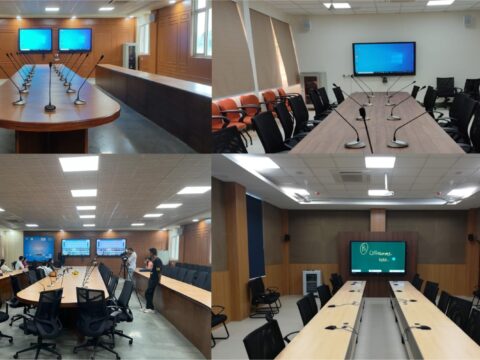
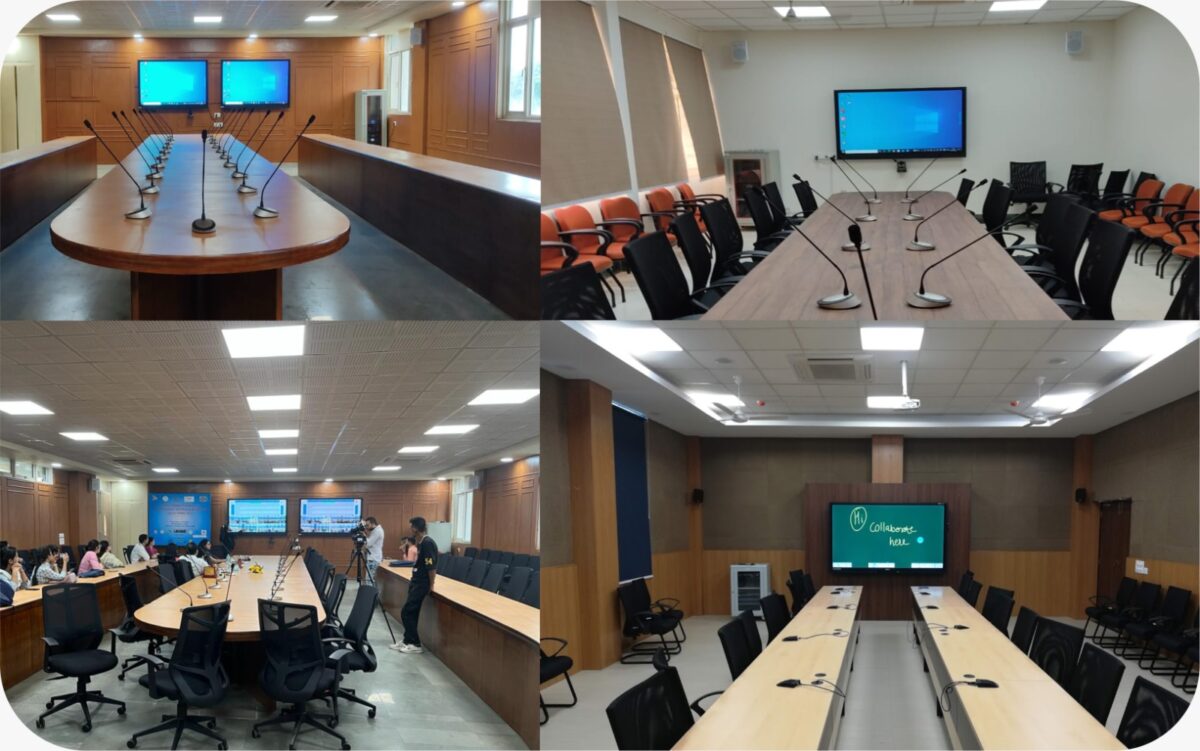
A Hybrid Classroom combines both in-person and online learning into a single teaching environment. In a hybrid learning classroom, some students attend classes physically, while others join remotely through video conferencing platforms.
Hybrid classroom technology includes AI-powered cameras, microphones, speakers, cloud-based learning platforms, and content recording tools. The hybrid education model focuses on flexibility, accessibility, and continuity of learning, allowing institutions to reach students beyond the physical classroom.
Benefits of Smart Classrooms for Students
One of the key Smart Classroom benefits for students is improved engagement and understanding.
Major advantages include:
- Interactive learning experiences through visuals, videos, and simulations
- Better concept clarity, especially for complex subjects
- Increased student participation through quizzes and collaborative activities
- Improved attention span compared to traditional classrooms
- Stronger teacher-student interaction in a physical learning environment
Smart classrooms are especially effective for K–12 education, where students benefit from guided instruction, physical presence and structured engagement.
Benefits of Hybrid Classrooms for Students
The Hybrid Classroom benefits for students are centred around flexibility and accessibility.
Key benefits include:
- Ability to learn from anywhere, reducing location barriers
- Access to recorded lectures for revision and self-paced learning
- Continuity of education during disruptions or absences
- Inclusive learning opportunities for remote or differently-abled students
- Better time management for higher education and adult learners
Hybrid classrooms are ideal for colleges, universities, and professional training institutes, where flexibility is a priority.
Benefits of Smart Classrooms for Teachers
From a teaching perspective, Smart Classroom advantages focus on efficiency and instructional quality.
Teachers benefit from:
- Simplified lesson delivery using digital teaching tools
- Reduced dependency on traditional chalk-and-talk methods
- Real-time assessment of student understanding
- Reusable digital lesson content
- Better classroom control and engagement
Smart classrooms allow teachers to focus on teaching effectiveness rather than classroom management, making them highly teacher-friendly.
Benefits of Hybrid Classrooms for Teachers
The Hybrid Classroom benefits for teachers extend teaching reach beyond physical boundaries.
Key advantages include:
- Ability to teach both in-person and remote students simultaneously
- Flexible teaching models such as blended and flipped learning
- Automated attendance, assessments, and performance tracking
- Recorded sessions that reduce repetitive teaching efforts
- Exposure to advanced digital teaching methodologies
However, hybrid teaching requires teachers to manage two learning environments at once, which may involve additional training and technical support.
Smart Classroom vs Hybrid Classroom in Modern Education
The comparison between Smart Classroom vs Hybrid Classroom is essential for institutions adopting digital education. While both models enhance learning through technology, their structure, flexibility, and impact on teaching methods vary significantly.
| Aspect | Smart Classroom | Hybrid Classroom |
| Mode of Learning | Fully in-person | In-person + online |
| Student Engagement | High physical interaction | Moderate to high |
| Learning Flexibility | Limited | Very high |
| Teaching Complexity | Low to moderate | High |
| Technology Focus | Interactive displays, content | Cameras, LMS, conferencing |
| Best Suited For | Schools, K–12 | Colleges, universities |
This Smart Classroom vs Hybrid Classroom comparison clearly shows that each model serves different educational needs.
Smart Classroom vs Hybrid Classroom: Which Is Better?
The question “Which is better, Smart Classroom or Hybrid Classroom?” depends on institutional objectives, student demographics and teaching capacity.
“Smart Classrooms offer a powerful and engaging learning environment, while Hybrid Classrooms enable future-ready and flexible education.”
- Smart Classrooms are better when:
- Student engagement and concept understanding are priorities
- Learners require physical supervision and guidance
- Institutions focus on structured, interactive classroom learning
- Hybrid Classrooms are better when:
- Flexibility and remote access are essential
- Institutions cater to geographically diverse learners
- Continuity of education is a key requirement
Many institutions are now adopting a blended approach, starting with smart classrooms and gradually upgrading to hybrid classroom solutions.
Conclusion: Smart Classroom vs Hybrid Classroom in Education
The debate around Smart Classroom vs Hybrid Classroom highlights the evolving needs of modern education and the importance of choosing the right learning model.In the evolving education ecosystem, both models play a crucial role. Smart Classrooms enhance the quality of in-person teaching, while Hybrid Classrooms expand access and flexibility. The ideal solution depends on how institutions balance engagement, accessibility, and teaching efficiency.
Ultimately, the future of education lies in technology-enabled classrooms that empower teachers and create meaningful learning experiences for students whether through smart classrooms, hybrid classrooms or a strategic combination of both.
By understanding the differences in this Smart Classroom vs Hybrid Classroom comparison, institutions can make informed, future-ready decisions.