

How AI Smart Classrooms Improve Learning Outcomes in Schools and Colleges
February 14, 2026
Composite Skill Labs in Schools & Colleges: Preparing Students for a Technology-Driven Future:
September 24, 2026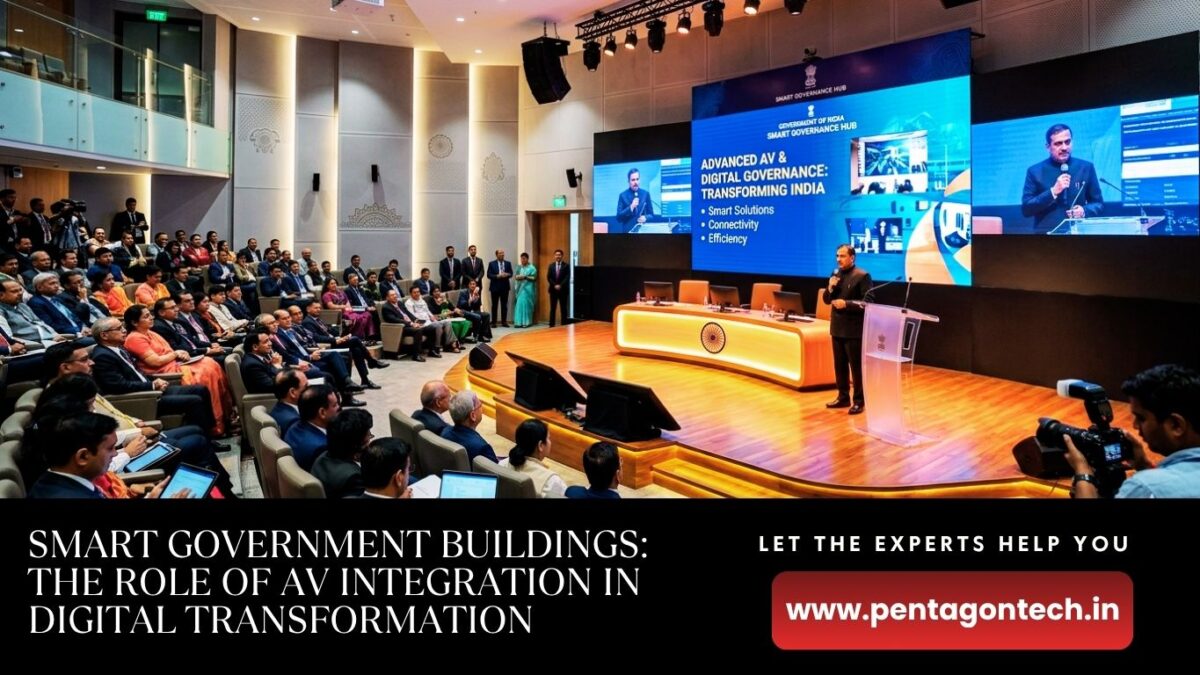
Introduction
As governments worldwide accelerate their digital transformation initiatives, the concept of smart government buildings is rapidly gaining momentum. From modern administrative offices to high-tech command centres, Audio-Visual (AV) integration is playing a pivotal role in enabling efficient communication, real-time decision-making and enhanced citizen services.
In countries like India, initiatives such as Digital India, Smart Cities Mission and e-Governance frameworks are driving the adoption of advanced AV technologies across government infrastructure.
This blog explores how AV integration in government sector projects is reshaping public administration and why it has become essential for future-ready governance.
What is AV Integration in Government Buildings?
AV integration refers to the seamless combination of audio, video, display and control systems into a unified technology ecosystem. In government buildings, this includes:
- Video conferencing systems
- Interactive displays and smart boards
- Digital signage solutions
- Command and control room video walls
- Public address (PA) systems
- Surveillance integration
These technologies work together to improve communication, collaboration and operational efficiency within government organizations.
Why AV Integration is Crucial for Smart Government Buildings
1. Enhanced Communication & Collaboration
Government departments often operate across multiple locations. With advanced AV solutions, officials can:
- Conduct secure video conferences
- Collaborate in real-time
- Reduce travel costs and delays
2. Efficient Decision-Making with Real-Time Data
Modern command and control centres use AV technologies like video walls and data dashboards to:
- Monitor city operations
- Respond to emergencies
- Analyse real-time data
This leads to faster and more informed decision-making.
3. Improved Citizen Engagement
Digital signage and interactive kiosks in government buildings help:
- Share real-time updates
- Provide wayfinding assistance
- Improve citizen experience
This creates a more transparent and accessible governance system.
4. Support for Hybrid Governance
Post-pandemic, hybrid working models have become standard in many government organizations. AV integration enables:
- Remote meetings
- Virtual hearings
- Online public consultations
Key AV Technologies Used in Government Projects
🔹 Interactive Flat Panels & Smart Boards
Used in:
- Government schools
- Training centres
- Meeting rooms
They enable interactive presentations and digital collaboration.
🔹 Video Conferencing Systems
Secure and scalable systems for:
- Ministries
- District offices
- Inter-department communication
🔹 Video Walls & Control Rooms
Essential for:
- Police departments
- Traffic management
- Disaster response centres
🔹 Public Address & Emergency Systems
Used for:
- Announcements
- Emergency alerts
- Crowd management
🔹 Integrated Surveillance with AV
Combining CCTV with AV systems enables:
- Centralized monitoring
- AI-based analytics
- Improved public safety
Benefits of AV Integration in the Government Sector
✔ Increased Operational Efficiency
Automation and centralized control reduce manual effort.
✔ Cost Savings
Less travel, faster workflows, and reduced downtime.
✔ Transparency & Accountability
Real-time monitoring and recording improve governance.
✔ Scalability
AV systems can grow with expanding government needs.
Challenges in Government AV Integration
Despite its advantages, there are some challenges:
- Budget constraints
- Integration with legacy systems
- Cybersecurity concerns
- Training and adoption
However, choosing the right AV integration partner can help overcome these issues effectively.
The Role of AV in Smart Cities and Digital India
India’s Smart Cities Mission heavily relies on AV technologies for:
- Integrated command centres
- Smart traffic systems
- Public safety monitoring
- Citizen engagement platforms
Similarly, Digital India initiatives emphasize paperless governance, where AV-enabled digital meetings and communication systems play a key role.
Future Trends in AV Integration for Government
🚀 AI-Powered AV Systems
Facial recognition, predictive analytics, and automation
🌐 IoT-Enabled Infrastructure
Connected devices for smarter operations
🔒 Secure AV Networks
End-to-end encrypted communication systems
🌱 Sustainable AV Solutions
Energy-efficient displays and systems
How to Choose the Right AV Integration Partner
When selecting an AV partner for government projects, consider:
- Experience in government sector projects
- Compliance with industry standards
- Ability to deliver scalable solutions
- Strong after-sales support
Conclusion
The integration of AV technology in government buildings is no longer optional—it is a necessity for building smart, efficient and citizen-centric governance systems.
From improving internal communication to enhancing public services, AV integration in the government sector is driving the next wave of digital transformation.
Organizations that invest in the right AV infrastructure today will be better equipped to meet the challenges of tomorrow.